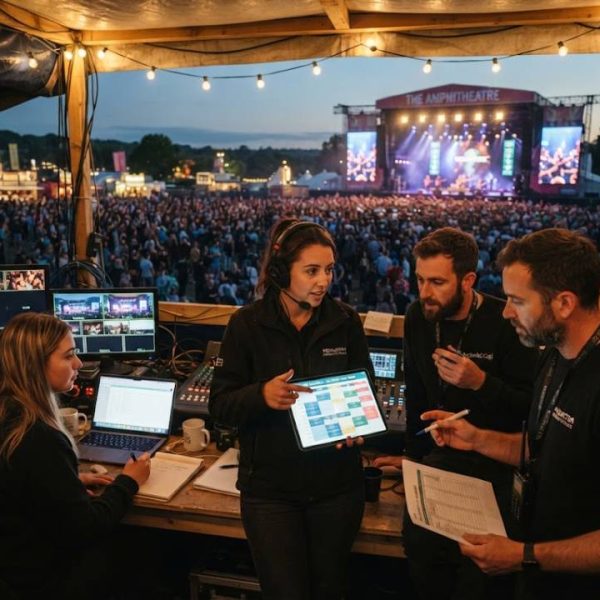
Music festival lineups have become genuinely international, with programmers booking artists from dozens of countries and audiences traveling across borders specifically to attend a single weekend event. That internationalization creates a communications problem organizers rarely anticipate when a festival is still small: ticketing pages, artist bios, schedules, and safety information all need to reach visitors who do not share a common first language.
A festival that built its website and app around a single language during its early years often discovers the gap only once international attendance climbs high enough that support emails and confused arrivals become a recurring headache during the event itself.
The festivals handling international growth smoothly are not necessarily the biggest budget events. They are the ones that treated multilingual content as core festival infrastructure rather than an afterthought handled the week before doors open.
Where festival content actually needs translation
Ticketing terms, refund policies, venue maps, and safety instructions carry real consequences when translated poorly or not at all. An attendee who cannot understand re-entry rules or emergency procedures in their own language faces a genuinely different festival experience than one who can, regardless of how good the actual music program is.
Festival organizers who have dealt with this describe the artist and schedule content as almost secondary compared to the operational content, since a confused fan who missed a set recovers quickly, but a safety miscommunication carries far higher stakes.
Why festivals turn to a dedicated platform
A translation platform online gives festival teams a shared workspace where marketing staff, ticketing operations, and local market coordinators can all contribute to and review translated content before it goes live, rather than relying on whichever staff member happens to speak a second language that year.
Wordbeam's translation platform online lets festival teams manage this collaboratively, with reviewers able to check translated safety and ticketing content against the original before publication rather than trusting a single translation pass.
Handling the pre-festival content surge
The weeks before a festival generate an enormous volume of content that all needs multilingual treatment simultaneously: lineup announcement updates, set time changes, travel guidance, and last-minute policy clarifications. Teams without a proper system find this period genuinely overwhelming, translating content reactively rather than with any lead time.
A translation platform built for this kind of volume lets festival marketing teams prepare multilingual versions of recurring content types in advance, adapting only the specific details that change from year to year rather than starting from a blank page each time.
Wordbeam's translation platform supports exactly that kind of reuse, storing previously translated festival content so recurring sections like refund policy or venue safety information stay consistent from one edition to the next.
What international attendees actually expect now
Festival-goers who travel internationally for events have increasingly high expectations around information access, having experienced other major international events that handle multiple languages smoothly. A festival that falls noticeably short of that standard risks a reputation problem that follows it into the next booking cycle, independent of how strong the actual lineup was.
Attendees who had a confusing or frustrating information experience are also considerably less likely to return the following year, even when the music itself met their expectations, since the overall experience of attending gets weighed alongside the performances.
Festivals handling fan content in a dozen languages face a moderation and publishing problem at once. Their feeds behave much like a rolling stream of latest headlines, where the value of an item decays within hours and the backlog is never actually cleared. Prioritisation matters more than completeness.
Coordinating with local promoters and venues
Festivals that expand into new countries typically work with local promoters, venues, and vendors who need festival branding and information materials in their own language, adding another layer of translation demand beyond the attendee-facing content.
Organizers who have managed this expansion well describe building a shared terminology base early, so festival-specific terms and branding language stay consistent whether a local partner in one country or another is producing materials for their market.
The social media dimension festivals cannot ignore
Festival social media accounts need to engage fans in multiple languages simultaneously, particularly during the event itself when real-time updates about schedule changes or weather delays need to reach every attendee regardless of language, often within minutes rather than hours.
Festivals that have built a rapid multilingual content process for social updates report noticeably fewer confused attendees during live schedule disruptions, compared to festivals still translating urgent updates through an ad hoc process during the event.
Building toward next year while the current one is still running
Experienced festival organizers describe the period immediately after one event as the ideal time to review what multilingual content worked and what created confusion, while the details are still fresh rather than waiting until planning for the next edition begins in earnest months later.
That continuous improvement approach, applied consistently across multiple editions, tends to be what separates festivals that scale their international audience smoothly from those that keep encountering the same avoidable translation problems year after year.
Industry standards shaping event localization
Groups such as the Globalization and Localization Association have documented how live event organizers approach multilingual content differently from static publishing, given the compressed timelines and safety-critical nature of festival information.
Guidance from the W3C Internationalization initiative also informs how festival websites and apps should structure translated content so it displays correctly across the range of devices and regional settings international attendees actually use.